
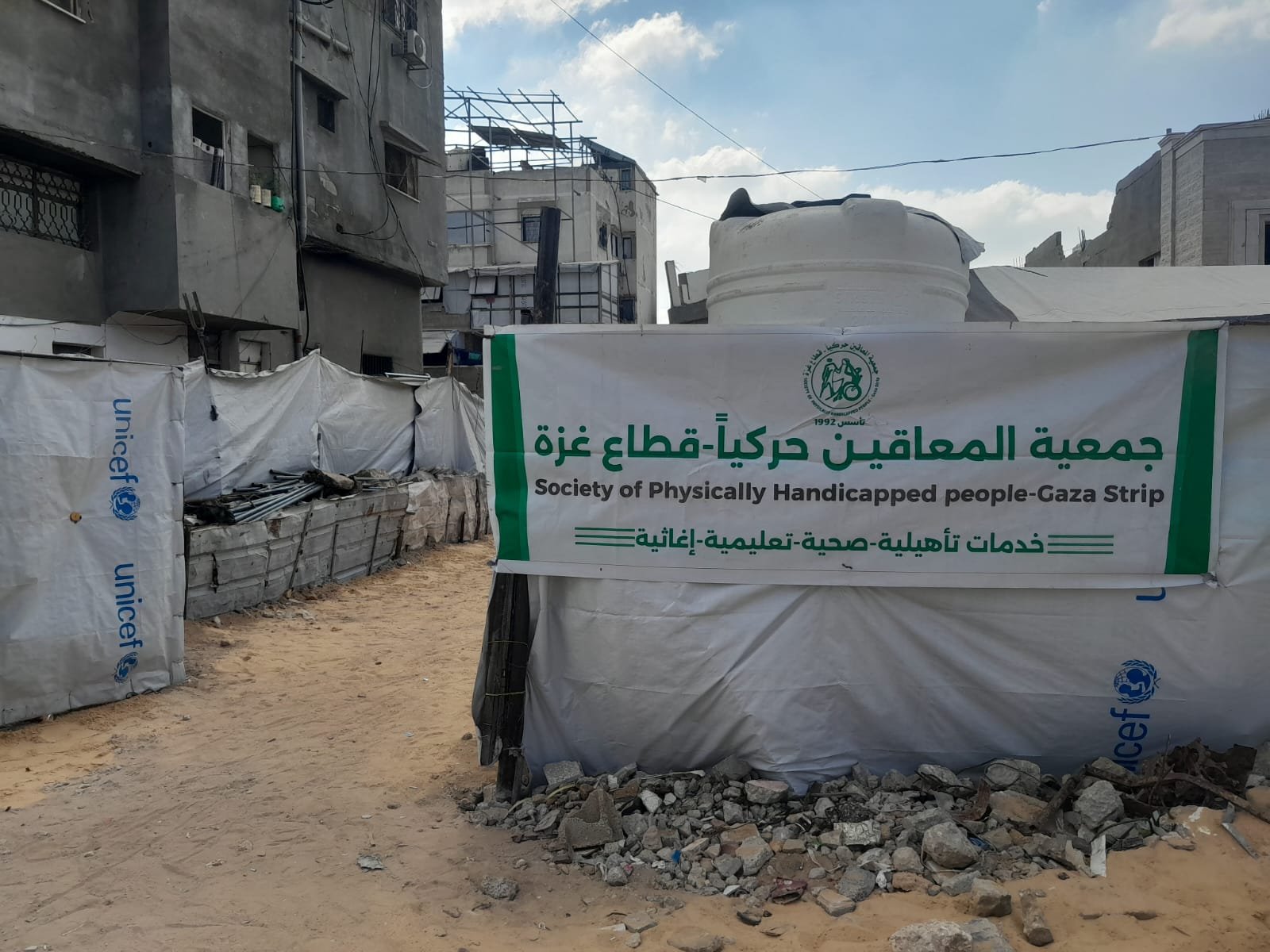
At Al-Lababidi Clinic, the journey to a medical consultation begins before a patient reaches the doctor’s desk. It begins on the road outside, continues along the clinic’s paved walkways, and leads into the tents where care is provided. Making that journey possible for people with disabilities was one of the most demanding parts of establishing the clinic.
Over approximately four months, the Society of Physically Handicapped People – Gaza Strip (SPHP) worked to turn a site with tents and difficult access into an operational clinic. The work involved securing essential facilities, raising the ground level, improving the approach road, paving internal paths, installing toilets and plumbing, and completing a canopy and covered shelter in preparation for winter.
Today, Al-Lababidi Clinic provides free medical consultations and medicines, alongside physiotherapy and access to a psychologist. Its development brings together the sustained efforts of SPHP and its leadership with support from partners and donors. Behind the services now available is a story of practical work, correspondence, follow-up, and determination to make healthcare easier to reach.
Establishing the Clinic: The First Tents
The clinic began with tents obtained through UNICEF. These provided the spaces around which SPHP could develop its healthcare activities. They were an essential starting point, but establishing a functioning clinic required work throughout the surrounding site as well as inside the tents.
A tent could provide a place for a consultation, yet patients still needed a usable route to its entrance. The site also required sanitation facilities, connected pipework, prepared ground, and spaces where people could move between services. Each of these needs became part of the wider task of bringing Al-Lababidi Clinic into operation.
SPHP approached the work as the development of a complete service environment. Reception, medical consultations, and the pharmacy needed to function together, while the physical surroundings had to support the people using them. The resulting clinic remains a tent-based facility: its progress is reflected in the infrastructure and services built around that starting point.
Four Months of Work Under Resource Constraints
At the beginning, the street, tent entrances, and internal pathways were not suitably adapted for people with disabilities. Improving these areas carried costs that made it difficult to complete the necessary work immediately. Limited resources affected the pace of development, and the association had to work progressively toward the facilities it needed.
The construction and preparation effort extended over approximately four months. SPHP and those responsible for the association continued pursuing support, following up on correspondence, and working with donors to secure essential improvements. The sanitation works were completed during the final month of that period, following the communications and coordination needed to move them forward.
This timeline matters because the finished features can conceal how much effort preceded them. A paved walkway, a connected toilet, or a prepared approach road represents more than the visible construction work. It also represents the time spent obtaining support and bringing the necessary resources together. The clinic’s development depended on both kinds of effort.
Raising the Ground Level and Improving the Approach Road
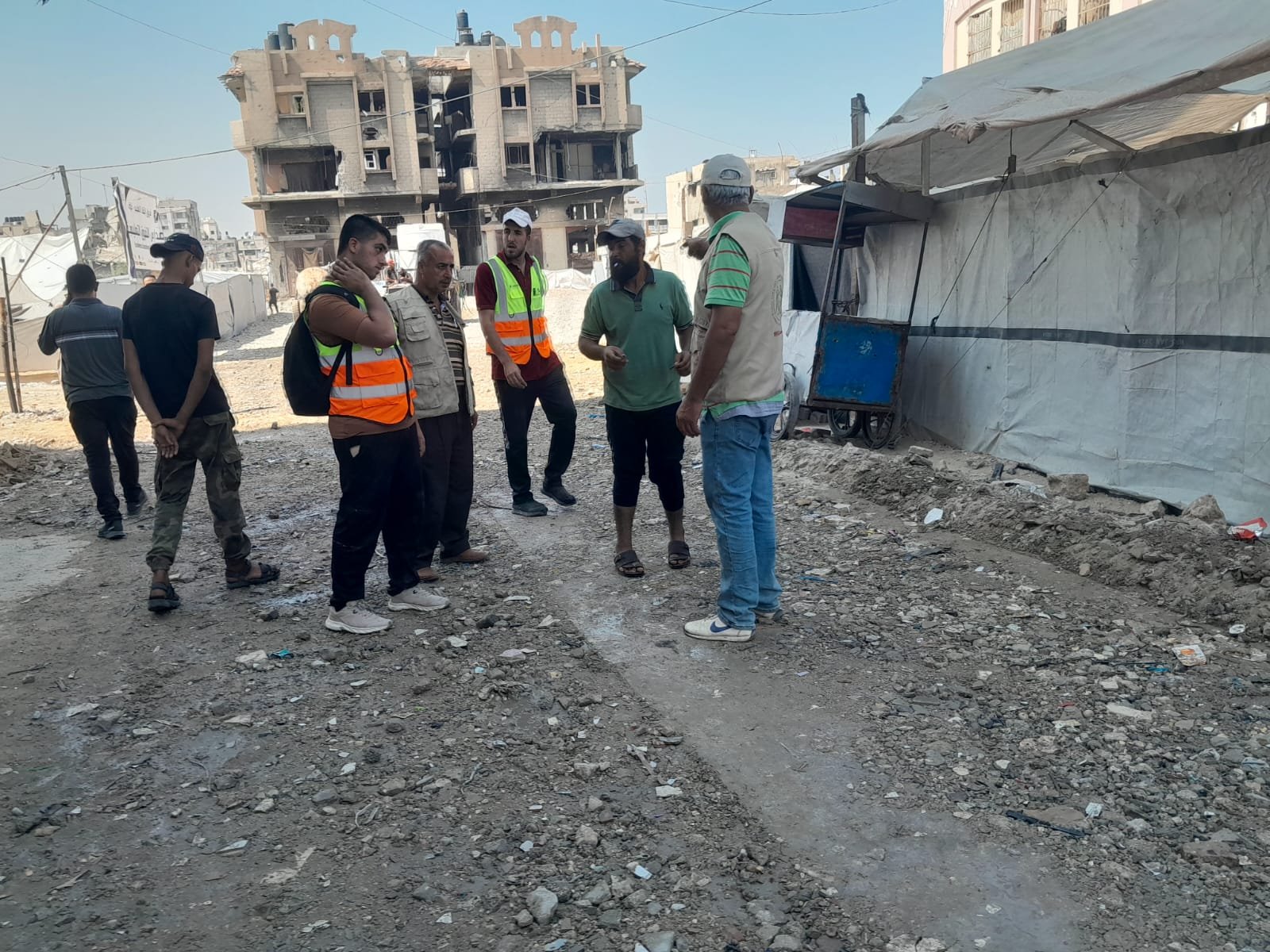
Preparing the ground was a central part of making the site more usable. The work included raising the ground level and improving access along the street and within the clinic grounds. These improvements were undertaken through the Friends of the Environment Association, in cooperation with the United Nations Development Programme (UNDP).
The photographs document road preparation and compaction, showing the physical work behind the clinic’s improved surroundings. For a facility serving people with disabilities, the approach route is part of the healthcare experience. Difficult ground outside the clinic can create an obstacle before a person has even reached reception.
Addressing the road and clinic grounds therefore supported the same objective as preparing the treatment spaces: enabling people to reach and use the services. The work connected the clinic’s internal development with the area immediately around it, rather than treating the entrance as the point where responsibility for access began.
Paving the Walkways and Making Access More Practical
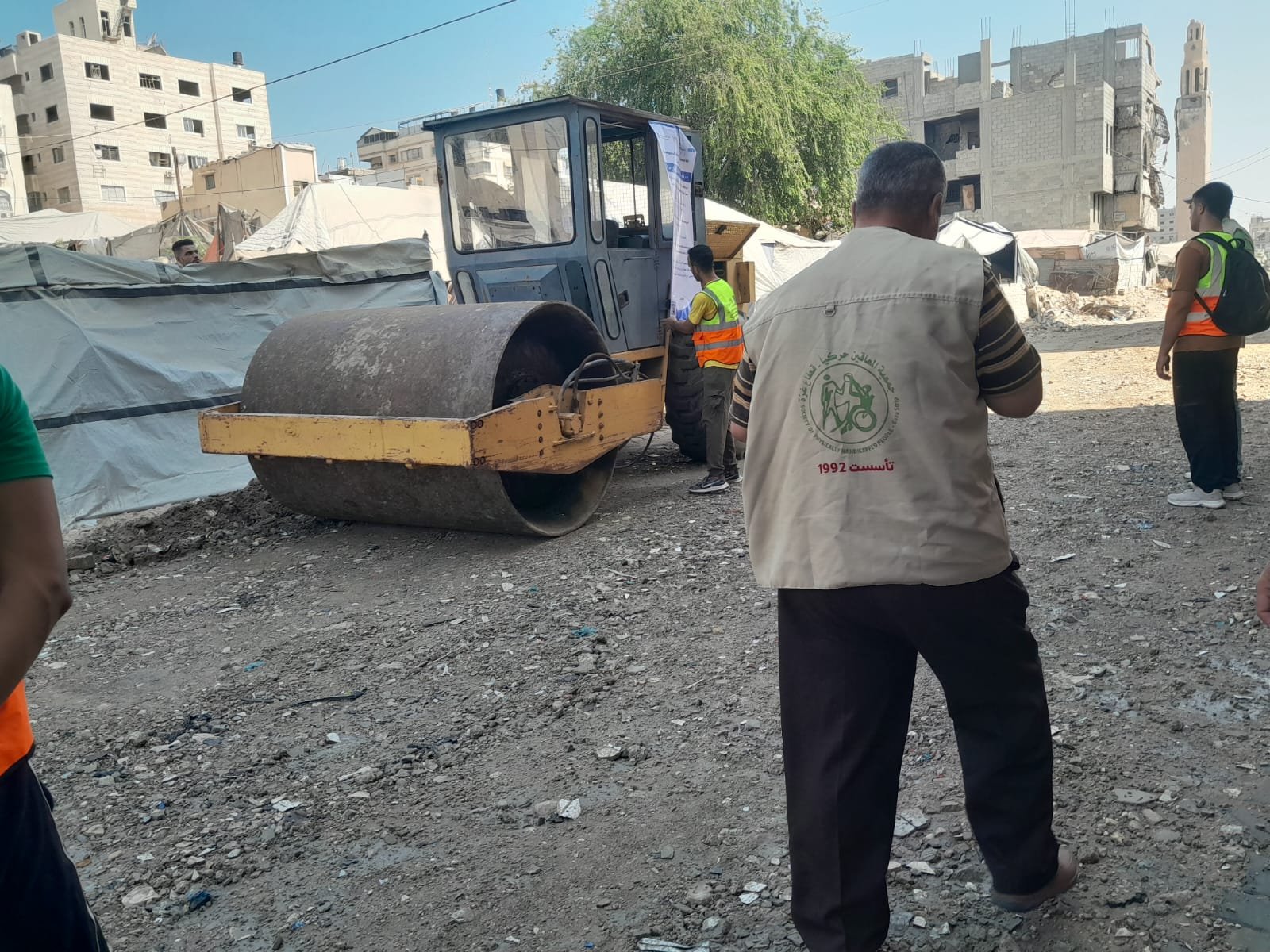
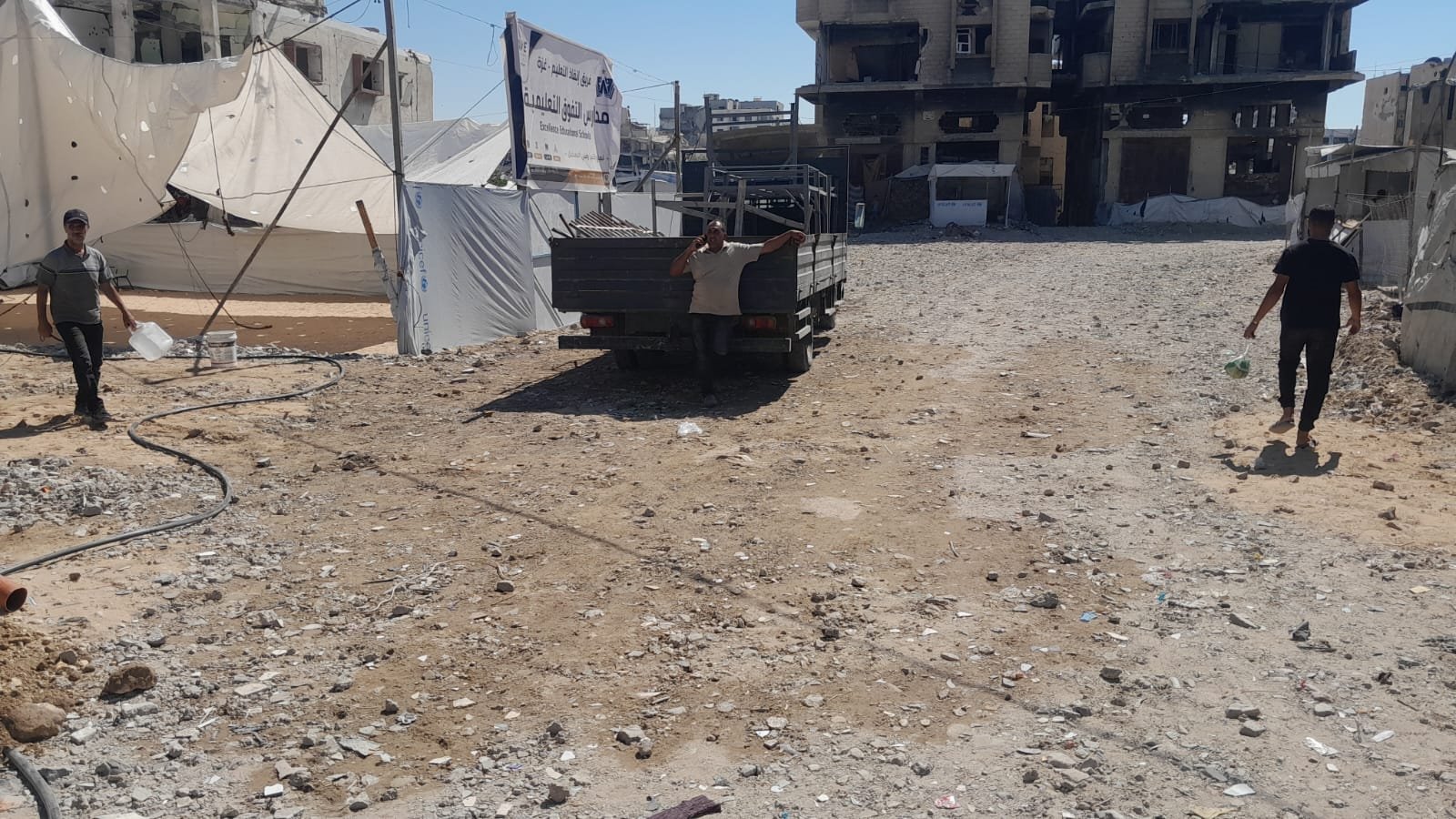
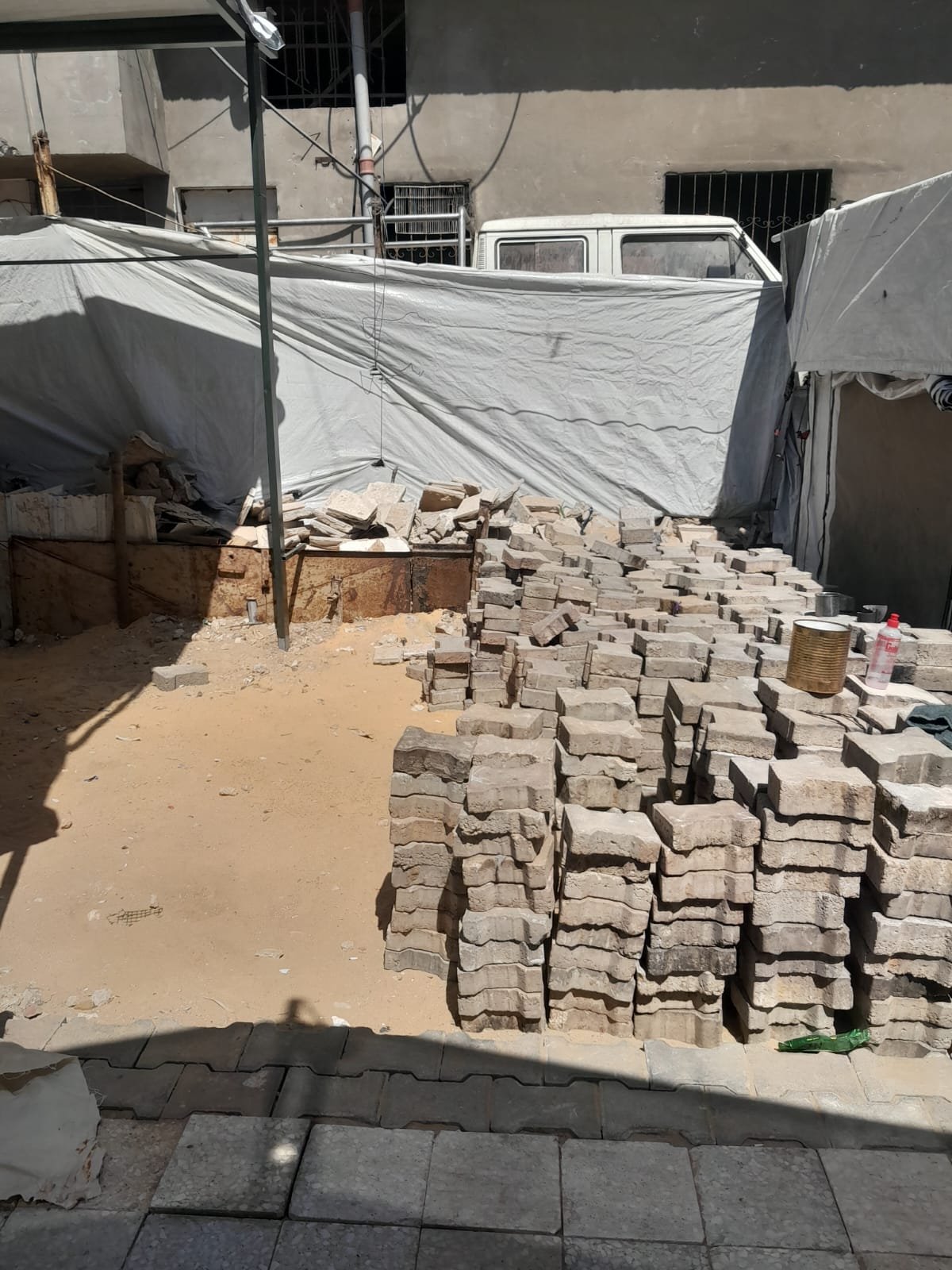
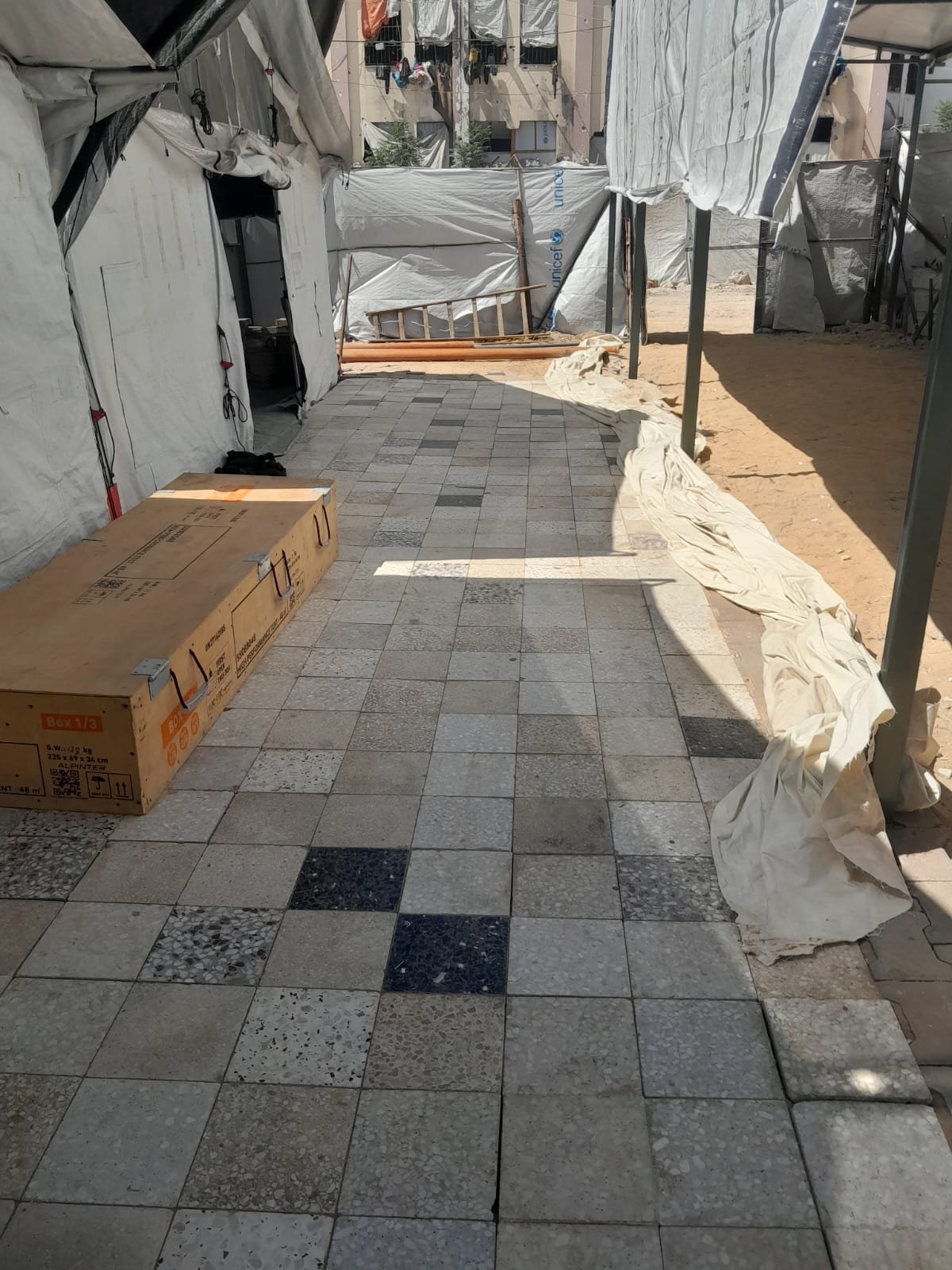
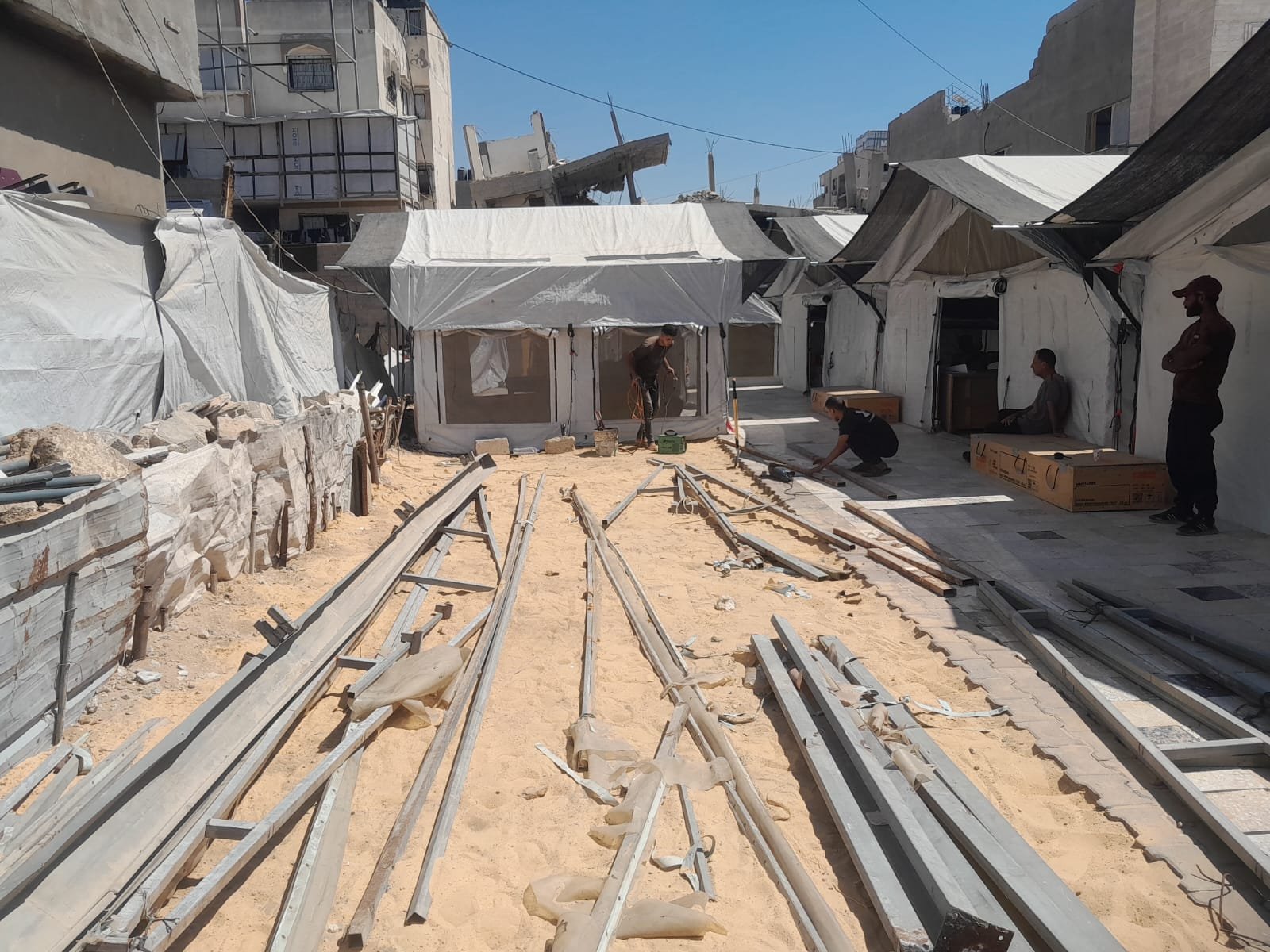
SPHP paved all of the clinic’s internal pathways as part of the effort to make the facility more suitable for people with disabilities. The photographs show the resulting tiled routes between the tents, alongside images of materials and work in progress.
These paths are an important part of the clinic’s layout. They connect the spaces patients need to use and help make movement around the site more practical, including for wheelchair users and people accompanying them. Improving access involved looking at the route through the facility, as well as the approach from the street.
The changes describe specific work completed at Al-Lababidi Clinic: prepared ground, paved circulation routes, and improved access to the service areas. Together, they show how the association responded to barriers it encountered during the clinic’s early operation. Making healthcare accessible required investment in the spaces between services as well as the services themselves.
Installing Six Toilets and Their Supporting Infrastructure
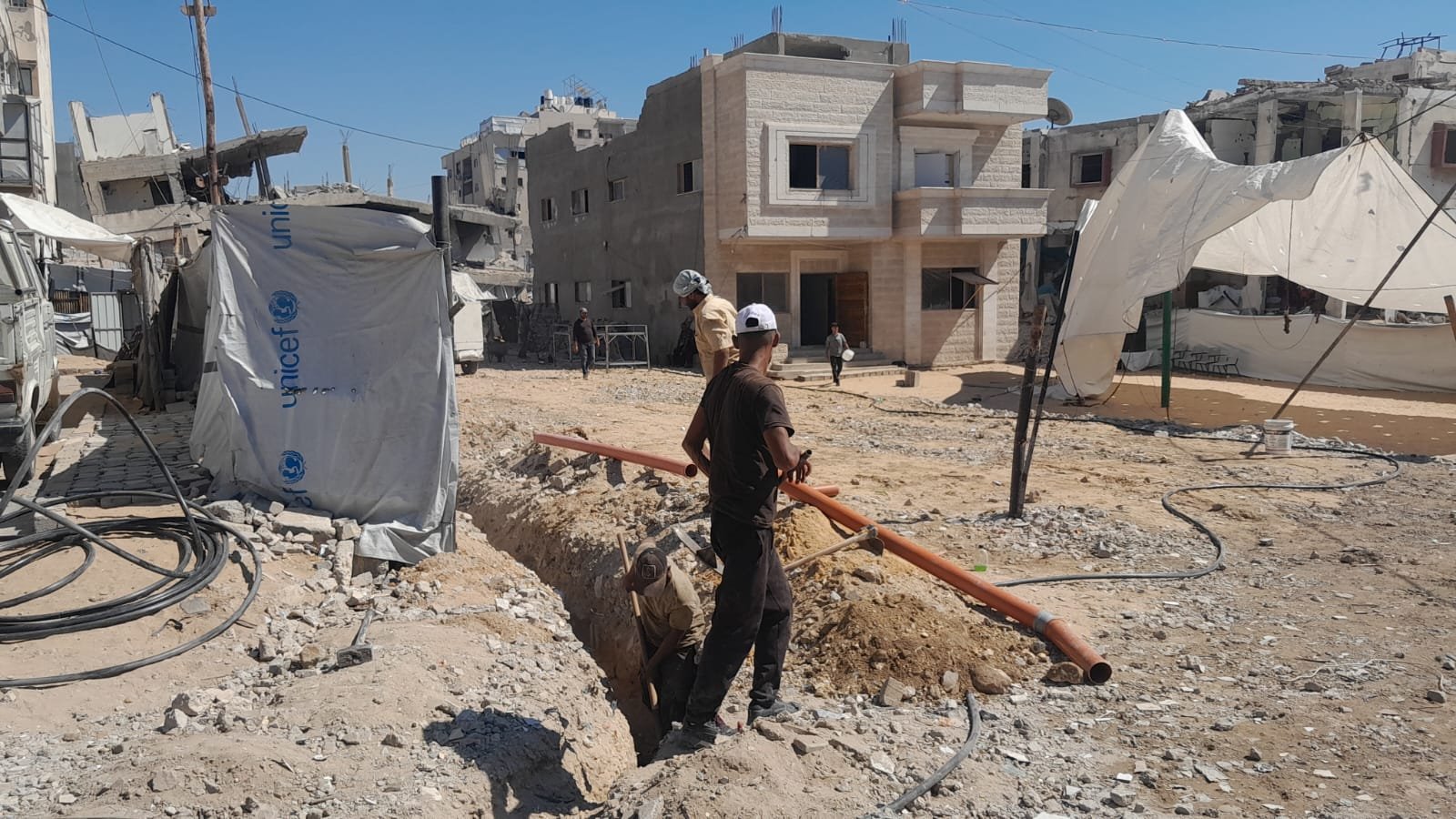
Sanitation formed another major part of the construction effort. Four internal toilets were established with UNICEF funding, including their plumbing connections and associated barrels. Completing these facilities required installation work beyond the toilet structures themselves, with attention to the connections that made them usable.
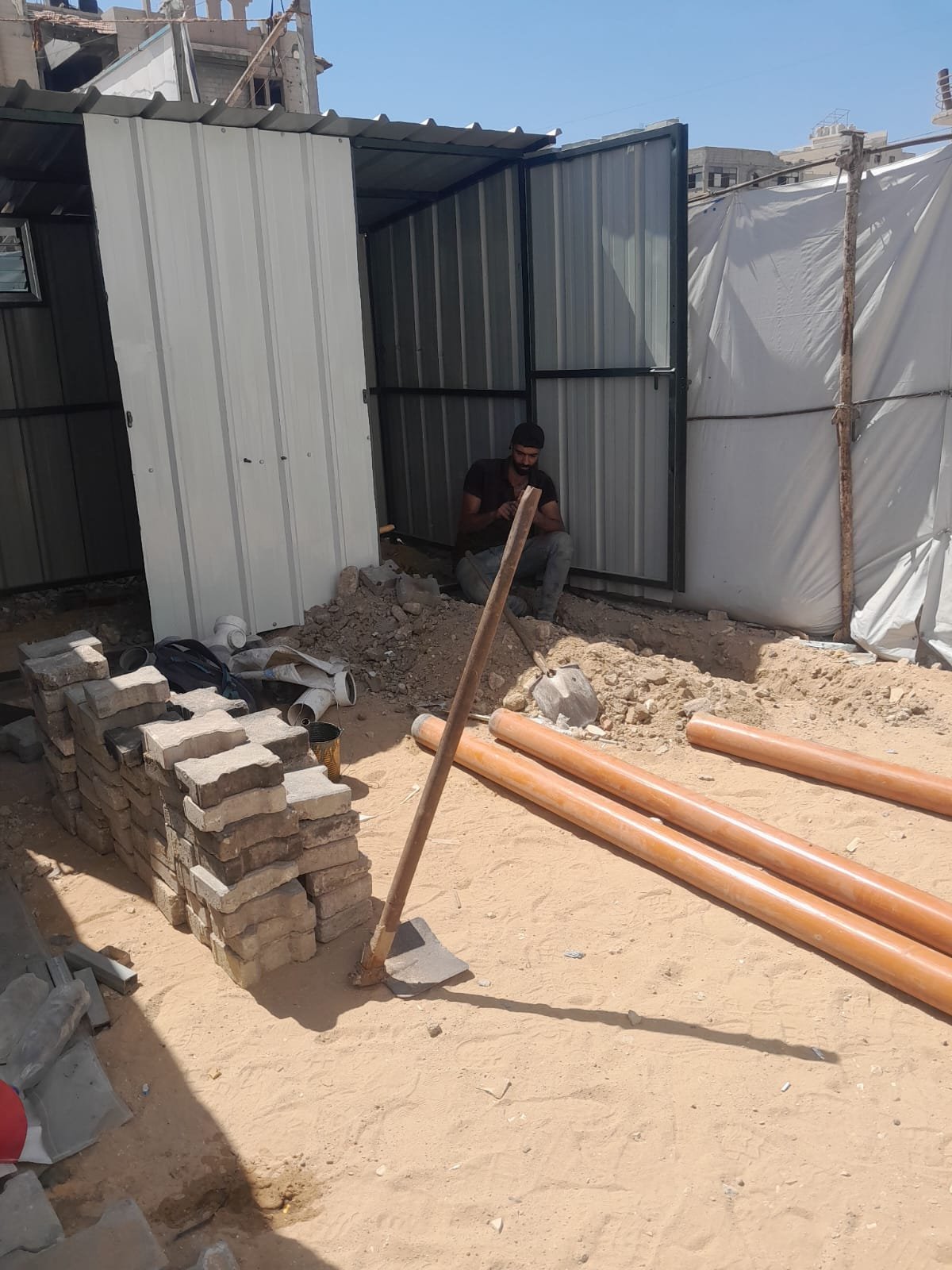
Two additional external toilets and a canopy were provided with support from the Red Cross. Together, the internal and external facilities formed an important addition to the clinic’s infrastructure. The photographs of excavation, pipes, and installation work help document this less visible part of preparing the site.
The toilet works were completed during the last month of the approximately four-month effort, after correspondence and follow-up. Their completion marked a practical milestone in the clinic’s development. Alongside the prepared ground and paved paths, the sanitation facilities helped turn the original tent arrangement into a more fully equipped place for receiving patients and delivering care.
Completing the Canopy and Preparing for Winter
The project also included completing the canopy and covered shelter. With this work finished, SPHP reports that the clinic is ready to receive patients during the winter. The shelter is part of the wider preparation of the site, alongside the ground works, walkways, and sanitation facilities.
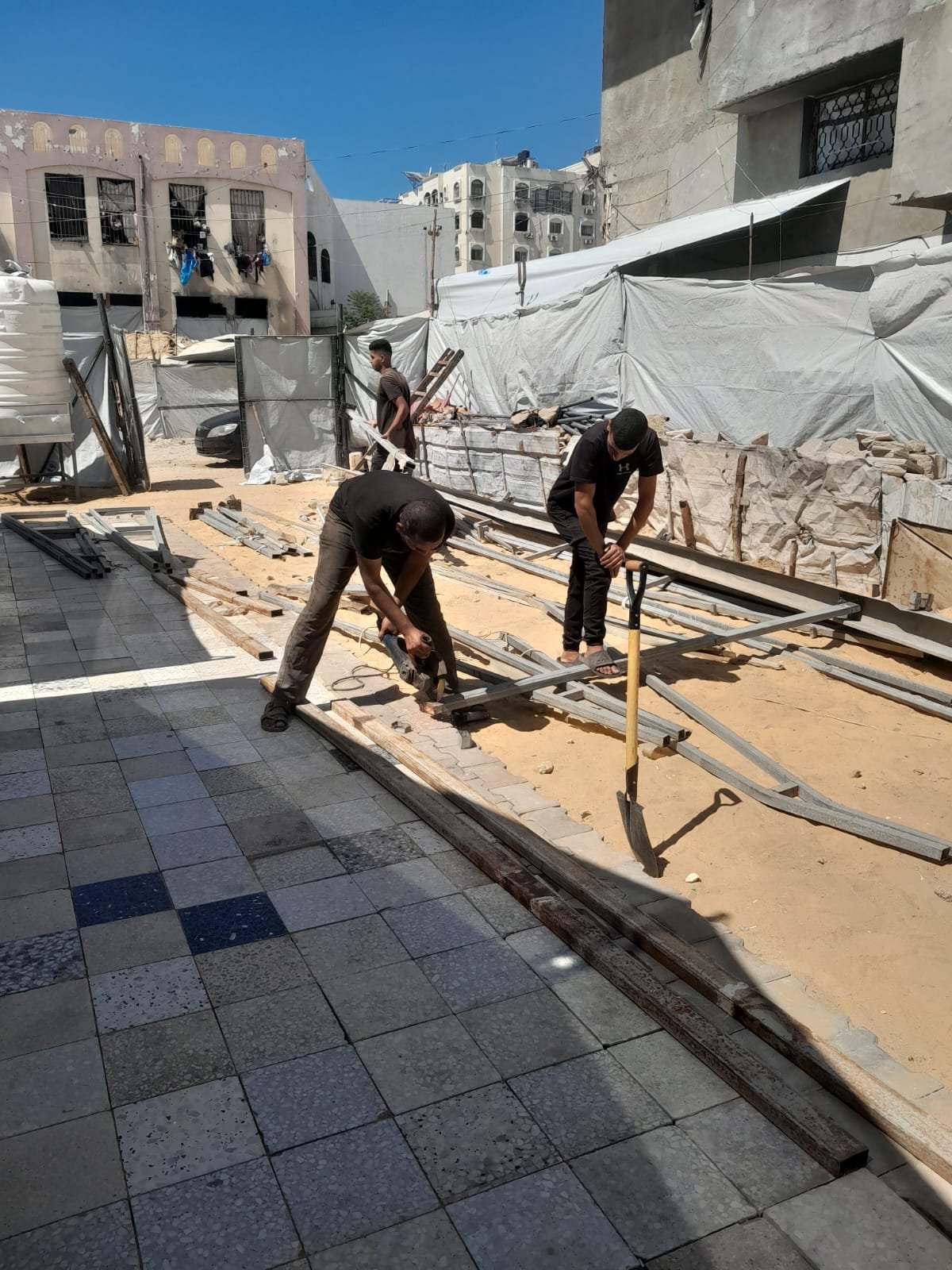
Photographs from the construction process show metal members being prepared and assembled within the clinic grounds. These images record a stage of the work; the completed shelter represents the subsequent result confirmed by the association.
For a clinic operating in tents, preparing the surrounding spaces is an ongoing part of maintaining a usable setting for care. Completing the shelter brought an important element of that preparation into place. It also reflects the association’s effort to consider the conditions in which patients and staff use the clinic, beyond the equipment inside a consultation area.
Free Healthcare Services at Al-Lababidi Clinic
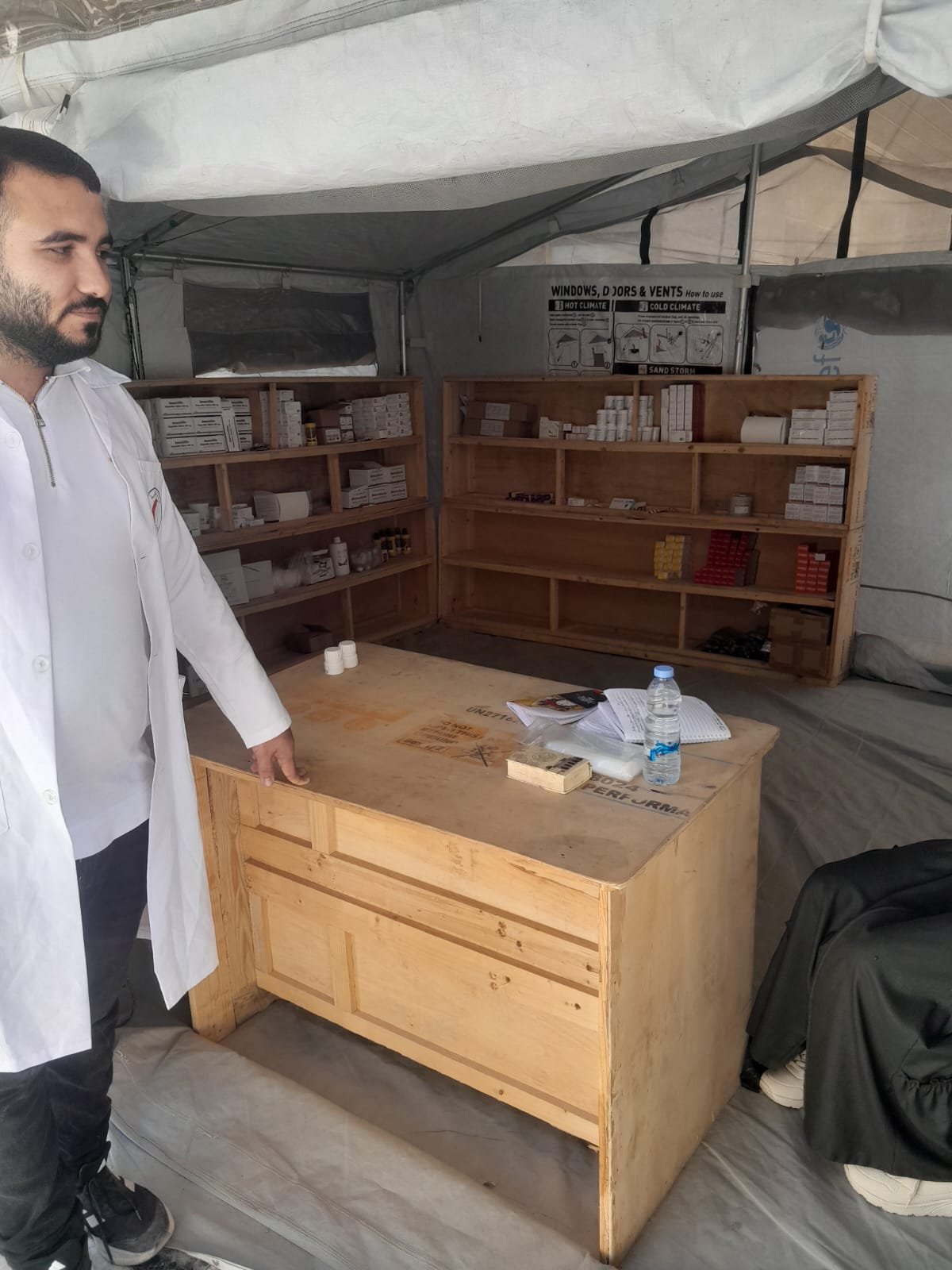
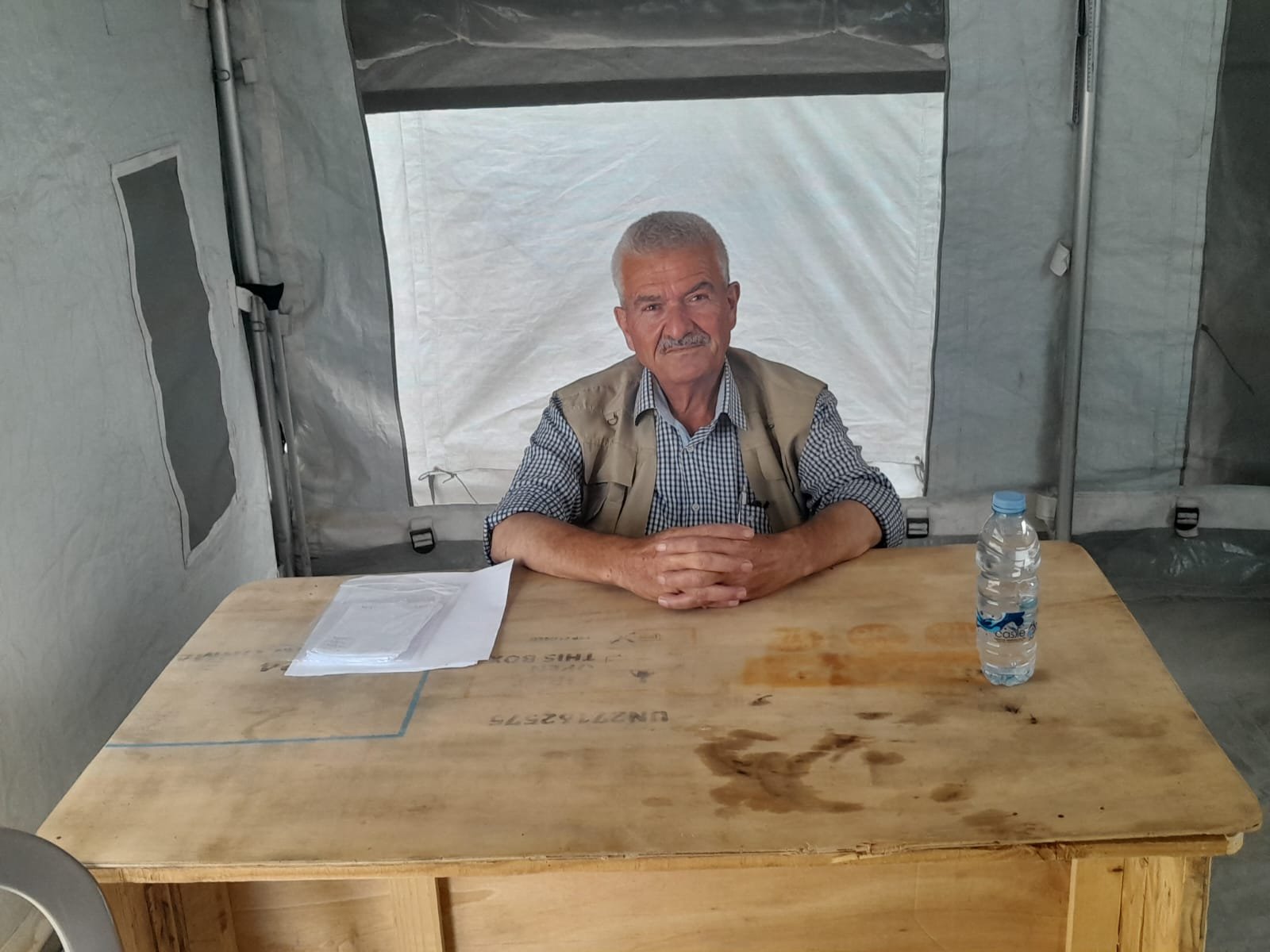
Al-Lababidi Clinic is now operational and receives patients, including people with disabilities. Its services include reception, consultation with a doctor, and a pharmacy. Medical consultations and the medicines supplied to patients are provided free of charge.
The Red Cross supplied the clinic’s medicines. This support is distinct from UNICEF’s contribution of tents and funding for the four internal toilets. Recognizing the contributions separately reflects how different forms of support came together to establish both the facility and the services it delivers.
The clinic also has physiotherapy services and a psychologist. These add to the care available within the facility and form part of its current service provision. The clinic’s staff work through a UNDP project, supporting the delivery of services within the setting developed by SPHP.
The availability of free consultations and medicines gives the infrastructure work a clear purpose. The road, pathways, shelter, and sanitation facilities support a place where patients can receive care. The association’s account of the clinic therefore includes both the construction journey and the services that make that effort meaningful today.
The Partners Behind the Progress
Al-Lababidi Clinic was developed through the efforts of SPHP, its leadership, and the partners whose support addressed different needs. The association’s persistence over the four-month period helped bring these contributions together as the work progressed.
UNICEF enabled the provision of the tents and funded the four internal toilets with their connections and associated barrels. The Friends of the Environment Association, in cooperation with UNDP, supported ground-level improvements and access work for the road and clinic grounds. The Red Cross supported two external toilets and a canopy, and supplied the medicines dispensed free to patients. Staffing is provided through a UNDP project.
Each contribution has a distinct place in the clinic’s story. Together with the association’s own work, they supported the move from an initially difficult site to a functioning healthcare facility. This collaboration linked construction needs, access improvements, essential medicines, and the personnel required to provide care.
A Practical Achievement Within the SPHP Health Program
The establishment of Al-Lababidi Clinic is a concrete part of the SPHP Health Program. It shows the work required to make a healthcare initiative usable in practice: obtaining tents, preparing the land, improving the road, paving the routes between services, connecting sanitation facilities, and completing shelter for the winter.
It also shows why progress must be understood over time. The clinic’s current condition was achieved through approximately four months of work under resource constraints, with important facilities completed only after sustained communication and follow-up. The finished site carries the results of that persistence.
Today, the focus is on the people arriving for care. A patient can come to reception, consult a doctor, and receive the medicines available through the clinic without charge. Physiotherapy and a psychologist are also available within the facility. For SPHP, these services are the purpose behind every stage of the construction effort: building a clinic that people with disabilities and other patients can reach and use.